Zaru Soba (Cold Soba with Dipping Sauce) (x0.5 scale)
Recipe by user david
Refreshing chilled buckwheat soba noodles served with a quick homemade mentsuyu-based dipping sauce.
Serves 2
Zaru soba is a classic Japanese summer dish featuring chilled, chewy buckwheat noodles served on a mat with savory-sweet dipping sauce (mentsuyu diluted with iced water). What makes this version special is the fast homemade dipping sauce built from sake, mirin, soy sauce, kombu, and katsuobushi for deep umami in about 15 minutes. Serve it on hot days, as a light lunch, or as part of a Japanese meal with small sides. For best texture, rinse the noodles thoroughly after cooking to remove starch (prevents sliminess and clumping) and chill briefly in iced water before serving; the dipping sauce can be made ahead and kept refrigerated.
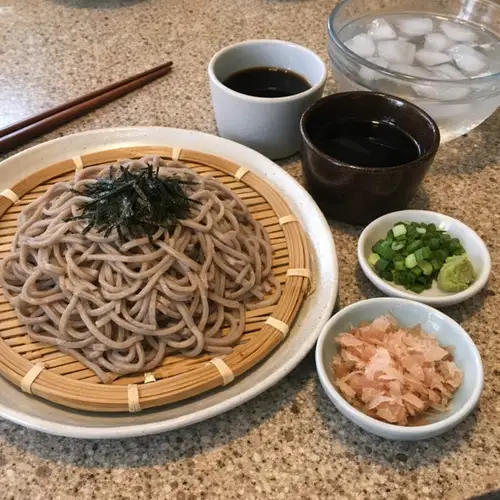
- 1 Tbsp, 1⁄2 tsp (19 g) soy sauce
- 1 Tbsp, 1⁄2 tsp (19 g) mirin, to taste
- 1 3⁄4 tsp (9 g) sake
- 0.15 piece kombu (dried kelp) (1/3 oz, 10 g per piece; 4 x 4 inches or 10 x 10 cm), dried kelp
- 1 Tbsp, 1⁄2 tsp to 2 Tbsp, 1 tsp katsuobushi (dried bonito flakes), packed
In a medium saucepan, bring sake and mirin to a boil over medium-high heat; cook until the alcohol smell dissipates. Add soy sauce. Add kombu and katsuobushi. Bring to a boil, reduce heat, and simmer 5 minutes. Turn off heat, steep until fully cooled to room temperature, then strain and set aside.
To Boil the Soba Noodles
- 7 oz 7 oz (200 g) dried soba noodles, buckwheat noodles
Bring a large pot of water to a boil (do not add salt). Add soba noodles, fanning them out; stir occasionally and cook according to package directions without overcooking.
Drain noodles in a sieve and rinse under cold running water, rubbing gently with your hands to remove excess starch.
Drain well, transfer noodles to a bowl of iced water, chill 30 seconds, then drain well.
To Serve
- nori seaweed, shredded
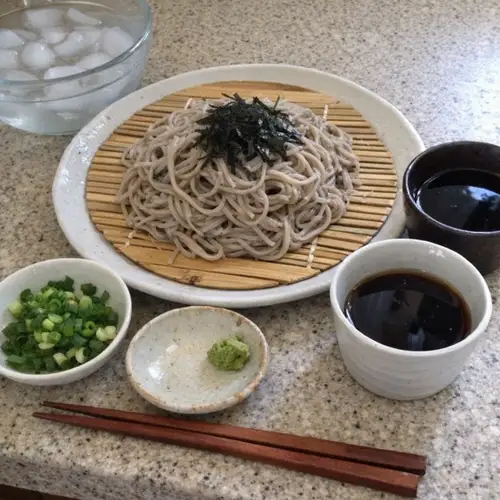
Portion the noodles onto bamboo sieves or mats set over plates and garnish with shredded nori.
- 3 Tbsp 3 Tbsp mentsuyu
- 1⁄2 cup, 1 Tbsp 1⁄2 cup, 1 Tbsp (133 g) ice water, for the dipping sauce
Combine mentsuyu and iced water; adjust to taste, then divide into individual dipping cups.
- 1 1 green onion
- wasabi (optional)
Chop the green onions and divide among small plates; add a dab of wasabi if desired and serve alongside the noodles and dipping sauce.
Notes
Make the homemade dipping sauce ahead and keep it in the fridge until ready to use; it’s a big time-saver.
Short on time? Use store-bought mentsuyu from a Japanese or Asian grocery store.
This dipping sauce is concentrated and needs to be diluted.
Make ahead and store in an airtight container in the refrigerator for up to a month.
Don’t discard the spent kombu and katsuobushi—repurpose them to make Furikake (Japanese rice seasoning).
Before draining, reserve 1–1½ cups of the cooking water (sobayu) to enjoy at the end of the meal.
Don’t skip rinsing—without it, the noodles will clump together and turn slimy.
If you’re done eating, pour the hot soba cooking water (sobayu) into the leftover dipping sauce and enjoy as a light broth.
Cook the soba noodles just before serving—they clump and lose their texture as they sit.
Thanks for visiting my site. | master-85ac015 (docker)