Easy Tonkotsu Ramen (x0.5 scale)
Recipe by user david
Rich, creamy pressure-cooker tonkotsu ramen with cold-brew dashi, shoyu tare, and classic toppings.
Serves 2
This recipe makes an intensely flavorful, milky-white tonkotsu broth using a pressure-cooker shortcut, then deepens it with cold-brew dashi and subtle “hidden seasonings” for ramen-shop richness in a fraction of the usual time. Serve it for a weekend ramen night, dinner party build-your-own ramen bowls, or meal prep (broth freezes well). Tips: soak and rinse bones well for a cleaner-tasting broth; skim regularly while boiling to keep the broth creamy but not gritty; don’t boil the tare after adding salt to avoid crystallization; warm ramen bowls so the soup stays hot, and top/serve immediately so noodles don’t over-soak.
- 1 1⁄4 tsp (6 g) sake
- 1 1⁄4 tsp (6 g) mirin
- 2 1⁄2 tsp usukuchi (light-colored) soy sauce
- 1 1⁄4 tsp (6 g) water, for tare
Make the shoyu tare: combine sake, mirin, light soy sauce, and water in a small pot.
- 0.2 piece kombu (dried kelp) (1/3 oz, 10 g per piece; 4 x 4 inches or 10 x 10 cm), 2.5 x 2.5 inches
- 5 g Diamond Kosher salt
Add kombu to the tare; heat over medium until nearly boiling, then reduce to low and simmer 3–4 minutes. Turn off heat, add kosher salt, stir to dissolve, and cool to room temperature.
Ramen Eggs (Ajitsuke Tamago) - To Make the Marinade:
Note that this recipe requires a marination time of 8 hours or overnight; gather all ingredients.
- 2 Tbsp (32 g) soy sauce
- 2 Tbsp (32 g) mirin
- 2 Tbsp (30 g) sake or water
- 1⁄2 tsp (2 g) sugar
In a small saucepan, combine the soy sauce, mirin, sake, and sugar.
Bring to a boil, whisking until the sugar dissolves; lower the heat and simmer for 1 minute. Turn off the heat and let cool completely.
Ramen Eggs (Ajitsuke Tamago) - To Cook the Soft-Boiled Eggs:
- 2 cups (470 g) water, for boiling
- 2 (100 g) large eggs, refrigerated until ready to boil
Bring the water to a full boil in a saucepan; gently lower in the eggs one at a time. Set a timer for 7 minutes after adding the first egg.
Maintain a gentle boil, keeping the water simmering without a strong bubble.
- ice water
After 7 minutes, remove the eggs and shock them in a bowl of iced water; cool for 15 minutes.
Ramen Eggs (Ajitsuke Tamago) - To Marinate the Eggs:
Once completely cooled, crack and peel the eggs (starting from the wide bottom end), dipping in the iced water as needed to help remove the shell.
Place the peeled eggs and the cooled marinade in a plastic bag; remove the air and seal the bag right above the eggs to keep them submerged. Refrigerate for 8 hours or overnight, rotating occasionally if desired.
Ramen Eggs (Ajitsuke Tamago) - To Serve:
- furikake, for serving
- shichimi togarashi, for serving
Remove the eggs from the marinade and cut in half lengthwise. Serve as a ramen topping, in bento, or as a snack; sprinkle with furikake and shichimi togarashi if desired.
Ramen Eggs (Ajitsuke Tamago) - To Store:
Store refrigerated; do not freeze. Remove the eggs from the marinade after 12–24 hours (they get saltier over time) and enjoy within 3–4 days if soft-boiled or within a week if hard-boiled. Do not reuse the marinade with new boiled eggs; repurpose it soon as a seasoning sauce if desired.
- 8 to 10 oz (230 to 280 g) pork belly, rind removed
Roll the pork belly into a tight log and tie securely with butcher’s twine.
- 0.25 (11 g) chunk fresh ginger, 1 inch, unpeeled
- 0.25 Tokyo negi (long green onion) or large leek or green onion, green part only
Cut and set aside the green part of the Tokyo negi; slice the ginger thinly.
- 3⁄4 tsp (3 g) vegetable oil, for searing
Heat the neutral oil in a skillet over high heat; sear the tied pork belly, turning until all sides are golden brown, about 10–15 minutes total.
- 1⁄4 cup (59 g) sake
- 1⁄4 cup (64 g) soy sauce
- 1⁄2 cup (120 g) water
- 2 Tbsp, 2 tsp (33 g) sugar
In a heavy-bottomed pot, combine sake, soy sauce, water, and sugar; add the Tokyo negi and ginger.
Transfer the seared chashu to the pot, bring to a boil over medium heat, skim foam, then reduce to low/simmer. Cover with an otoshibuta (drop lid) and simmer for 2 hours, turning the chashu every 30 minutes; turn off heat and let cool slightly.
Strain the cooking liquid. Transfer the chashu to a container or vacuum-seal bag; add some braising liquid to cover the bottom, seal, and refrigerate to rest overnight (about 8 hours).
Remove chashu from the bag, cut off and discard the twine, and slice into 1/4-inch pieces. Optionally torch or broil briefly to sear the surface; serve immediately or on ramen.
Make the broth
- 1.8 lbs 1.8 lbs (790 g) pork leg bones
- 10 oz 10 oz (300 g) pork hock or pig foot/trotter, with skin
Rinse the pork leg bones and pork hock under running water.
- 5 Tbsp 5 Tbsp shoyu tare
Add 10 Tbsp. shoyu tare.
- water, for soaking
Soak the bones and hock in a large bowl of water for 15 minutes, changing the water several times to remove blood.
- 0.5 heads 0.5 heads garlic
- 0.5 0.5 ginger paste, 1-inch knob, skin on
Prep aromatics: peel off papery outer garlic layers (keep head whole), trim root end, and slice the head in half crosswise; slice the ginger into thin slices (skin on).
- 1 L 1 L (1 kg) water
Add bones, hock, ginger, garlic, and water to a pressure cooker/Instant Pot. Pressure cook on High for 60 minutes (allow about 40 minutes to come to pressure).
- 0.5 0.5 piece kombu (dried kelp) (1/3 oz, 10 g per piece; 4 x 4 inches or 10 x 10 cm), 6 x 6 inches
- 1 1 dried shiitake mushrooms
- 2.5 2.5 iriko/niboshi (boiled and dried anchovies)
- 1 cup 1 cup (240 g) water, for cold brew dashi
Cold brew dashi: combine kombu, dried shiitake mushrooms, and iriko/niboshi with water; set aside at room temperature to extract umami.
- 0.5 0.5 (100 g) onion
- 1 1 green onion, chopped
Prepare hidden seasonings: cut the onion in half (skin on) and cut the green onions/scallions in half crosswise; set aside.
When pressure cooking ends, quick release pressure carefully. Open the lid and bring the broth to a rolling boil on Sauté (high) or over high heat; skim scum from the surface as it appears.
- 1 Tbsp 1 Tbsp (15 g) rice vinegar, unseasoned
- 1 Tbsp 1 Tbsp (15 g) sake
Add the onion and green onions to the broth. Add rice vinegar and sake. Remove the soaked shiitake mushrooms and anchovies from the cold-brew dashi and add them to the broth; reserve the dashi liquid.
- 1⁄2 cup 1⁄2 cup katsuobushi (dried bonito flakes)
Add katsuobushi and stir to combine.
Boil the broth for 1 hour total, skimming occasionally; after 30 minutes of boiling, add only the reserved dashi liquid (do not add the kombu). Stir regularly; continue boiling another 30 minutes, stirring occasionally to emulsify.
Strain the broth: remove large bones to a mesh strainer set over a clean pot and discard; transfer remaining solids to the strainer, press to extract liquid, and discard solids. Strain remaining broth in batches if needed.
Assemble Ramen
- 2 2 servings fresh ramen noodles
Cook noodles: bring a large pot of water to a boil and cook the fresh ramen noodles according to the package instructions; drain thoroughly.
- 2 Tbsp 2 Tbsp shoyu tare
Assemble: warm ramen bowls, add about 1 tablespoon tare to each bowl, and ladle hot broth into bowls. Add noodles and arrange neatly.
- 1 1 green onion, chopped, for topping
- 2 2 Ramen Egg
- 4 slices 4 slices Chashu
- menma (seasoned bamboo shoots), for topping
- dried wood ear mushrooms (optional), rehydrated and thinly sliced
- 1 1⁄2 tsp 1 1⁄2 tsp pickled red ginger (beni shoga or kizami beni shoga) (optional)
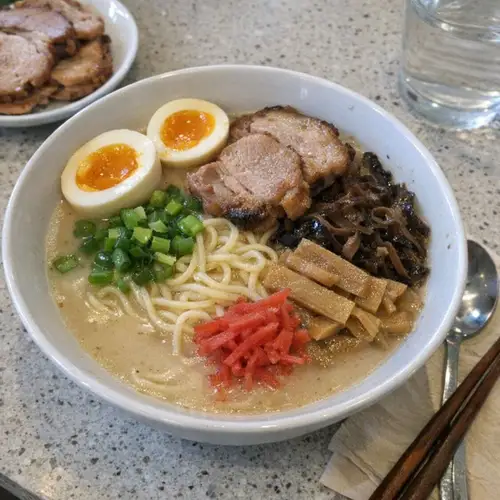
Top and serve immediately with chopped green onions, ramen eggs (halved), chashu slices, menma, wood ear mushrooms, and pickled red ginger.
Notes
If using pork backbones, remove the white spinal cord-like tissue (it can give off a strong odor); use chopsticks to avoid getting cut by the bones.
If the water level in the pressure cooker is above the maximum line, remove some water and add it back later when boiling the broth.
No pressure cooker option: add 2 cups more water and simmer uncovered 3–4 hours (partially cover to reduce evaporation).
Do not boil or reheat the tare after adding the salt; it may crystallize and not dissolve properly.
To store broth for later: cool quickly (ice bath/cold water), then refrigerate up to 3 days or freeze up to 1 month.
Store leftovers in separate containers up to 3 days; boil noodles right before serving.
Thanks for visiting my site. | master-85ac015 (docker)