Miso Salmon (x2 scale)
Recipe by user david
Salmon fillets are lightly marinated in a sweet-savory miso sauce, then broiled (or baked) until crisp outside and moist inside.
Serves 4
This miso salmon uses a short miso-based marinade (miso, sake, mirin, soy sauce, and toasted sesame oil) that caramelizes quickly under the broiler for a crisp, flavorful exterior while keeping the center tender and juicy. It’s ideal for an easy weeknight Japanese-inspired dinner but special enough for entertaining; pair it with rice (especially ginger rice) and a simple vegetable side. Key tips: marinate 1–2 hours (avoid overnight because miso is salty), scrape off excess marinade before cooking because miso burns easily, and use an instant-read thermometer for best doneness (salmon continues cooking from residual heat).
Before You Start:
- 4 fillets 4 fillets skin-on salmon fillets
Run your fingers along the salmon flesh and sides to check for bones; pull any out with tweezers. Check the skin for scales and scrape off with the flat edge of a knife.
To Lightly Marinate:
- 1⁄4 cup 1⁄4 cup miso, any type of miso
- 2 Tbsp 2 Tbsp (30 g) sake
- 2 Tbsp 2 Tbsp (32 g) mirin
- 2 Tbsp 2 Tbsp (32 g) soy sauce
- 1⁄2 tsp 1⁄2 tsp toasted sesame oil
Mix the miso, sake, mirin, soy sauce, and toasted sesame oil in a large bowl or flat tray to make the marinade.
If needed, portion the salmon into individual fillets (about 6 oz/170 g each). Place in the marinade skin side up, spoon marinade over to coat, cover, and refrigerate 1–2 hours (up to 3 hours for thicker cuts). Avoid marinating overnight.
To Broil (recommended):
Preheat the broiler to High (550°F/290°C) with a rack centered about 9 inches (23 cm) from the top heating element; preheat 5 minutes.
- 2 2 green onions (optional), chopped, for serving
- canola oil, for spraying or brushing baking sheet
Thinly slice the green onion/scallion on a diagonal. Line a baking sheet with foil and spray or brush with oil so the salmon won’t stick.
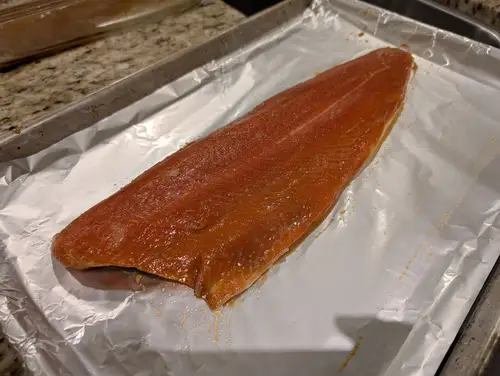
Remove excess marinade from the salmon (miso burns easily). Place salmon skin side down on the prepared baking sheet.
Broil 10–13 minutes, or until the thickest part reaches 125–130°F (52–54°C). Do not flip. For medium-rare, stop at 120°F (49°C).
To Serve:
- 1 tsp 1 tsp toasted white and black sesame seeds (optional), for serving
Top with toasted white and black sesame seeds and sliced green onion/scallion, if using, and serve.
- water (optional), optional, for diluting marinade into glaze
Optional glaze: Dilute the remaining marinade with a little water and simmer a few minutes; drizzle over the salmon or save for another dish.
Notes
Please note that this recipe requires a marination time of 1–2 hours.
To check 2 skin-on salmon fillets for bones, run your fingers along the flesh and sides, then pull them out with fish boning tweezers. To check for scales, run your fingers over the fish skin and scrape them off with the flat edge of a knife.
Nami's Tip: Slicing into individual fillets makes for quicker, more even cooking.
When broiling, you don’t adjust the oven temperature; instead, you control the cooking by adjusting the rack distance (how close the food is to the broiler). Think of it like using hotter and cooler zones on a grill.
Line a baking sheet with aluminum foil (since parchment paper will burn).
Scrape off the excess marinade from all sides with an offset spatula or butter knife.
Note: The USDA recommends cooking fish to 145°F (63°C). Keep in mind that the salmon continues to cook with residual heat, which may cause it to overcook.
Remove the salmon from the oven and check doneness by flaking the flesh—it's ready if it flakes easily.
Optional char: For a golden, slightly blistered finish, underbake the salmon a little, then remove the probe and switch to broil on High (550°F/290°C). Keep the rack in the center and broil for about 3 minutes, until the surface is browned. Remember, the salmon will continue to cook while broiling, so switch early to avoid overcooking.
You can store the leftovers in an airtight container and store in the refrigerator for up to 3 days and in the freezer for a month.
Thanks for visiting my site. | master-85ac015 (docker)